
Sado Island Homestay & Cultural Tour
Two years ago, my student Cole visited Sado Island with his friend. This time, he returned with his partner Lily to experience our homestay and a fully customized cultural tour.
Our home is located in a small village on Sado Island with about 30 households. The local people still grow rice and vegetables and cherish traditional festivals and rituals. Traditions such as harvest festivals and Nembutsu prayers for the villagers’ health and happiness have been passed down for generations and are still very much alive today.
We wanted Cole and Lily to truly immerse themselves in the Japanese countryside and experience the local way of life. Here’s a glimpse into their journey:
Day 1: Welcome Dinner
We picked them up at the ferry terminal and enjoyed a relaxing tea while getting to know each other. To our surprise, they brought a cap from none other than Shohei Ohtani, the famous Japanese baseball player from Los Angeles—Arigatougozaimasu!
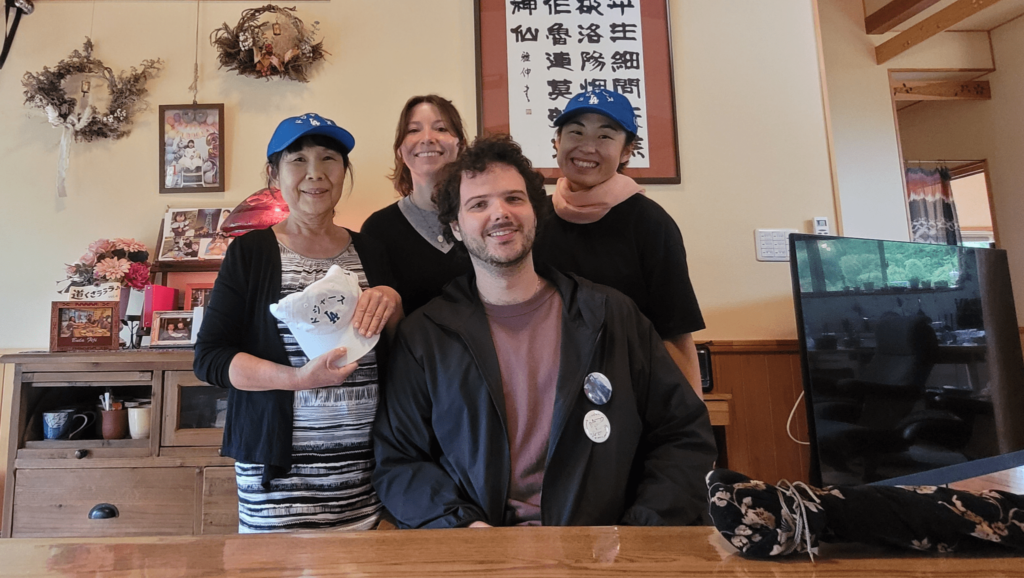
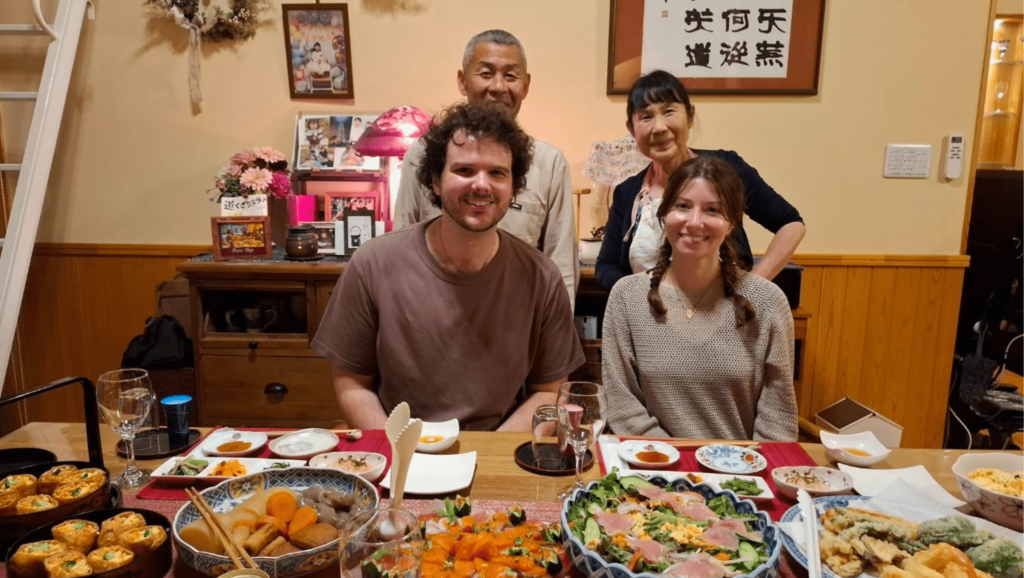
Homemade dinner with family
Their guest room was a Japanese-style room with tatami mats and futons, offering views of rice fields and nature right from the window. On clear nights, you could also see the moon and stars.
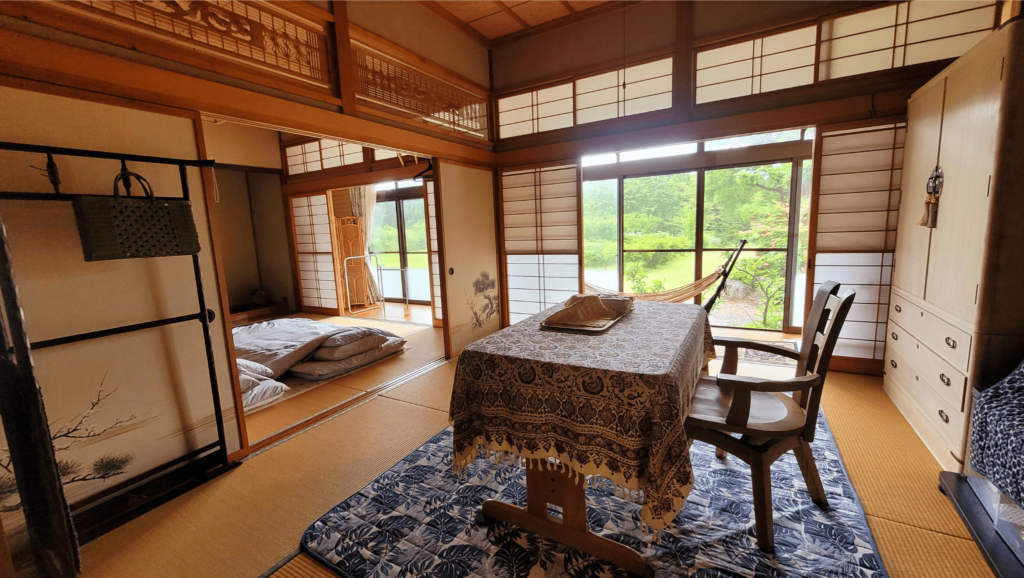
Guest room
Day 2: History and Traditional Performing Arts
We spent the day fully immersed in Sado’s traditional culture, performing arts, and history. We began by watching a Bunya Ningyo puppet theater performance, followed by a delicious local soba lunch.
The play depicted a famous scene from Japanese history, and the staff explained the background and characters beforehand, which made the experience even more enjoyable. After the show, Cole and Lily had the chance to try operating the puppets themselves, feeling the delicate craftsmanship and lifelike movements up close.
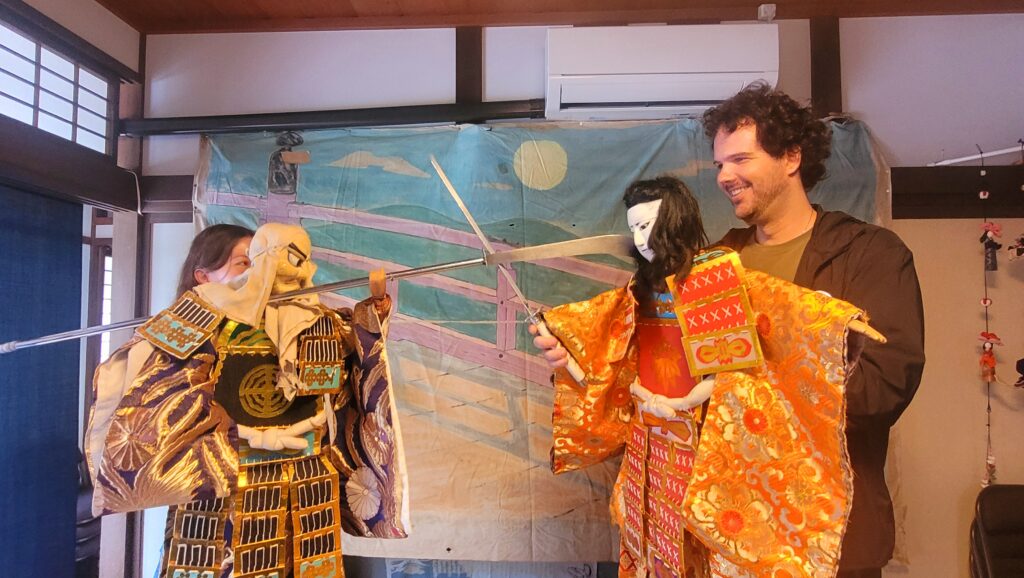
Bunya Ningyo puppet experience
That evening, we attended a Noh performance at Ushio Shrine—a highlight that Cole had been especially looking forward to. With a history of over 1,200 years, this performance is a sacred offering held on the eve of the village festival. The torch-lit stage created a mystical atmosphere, allowing us to experience yūgen—the subtle, profound beauty unique to Japanese culture.
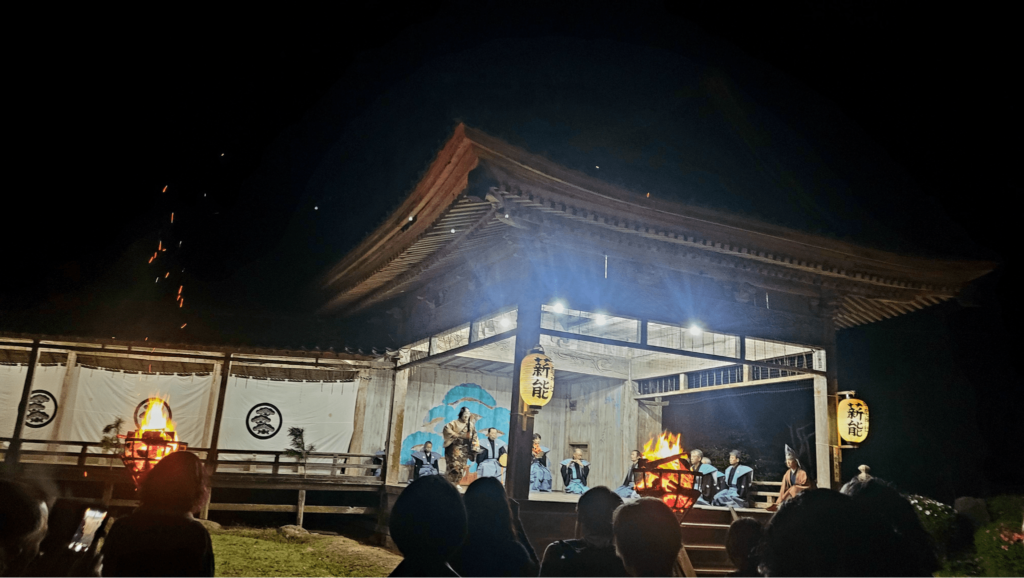
Noh performance at a shrine
Day 3: Local Culture and Village Festival
In the morning, we chatted with my uncle. At my house, neighbors and relatives often drop by for tea. Though a bit shy :), my uncle seemed genuinely happy to meet Cole and Lily.
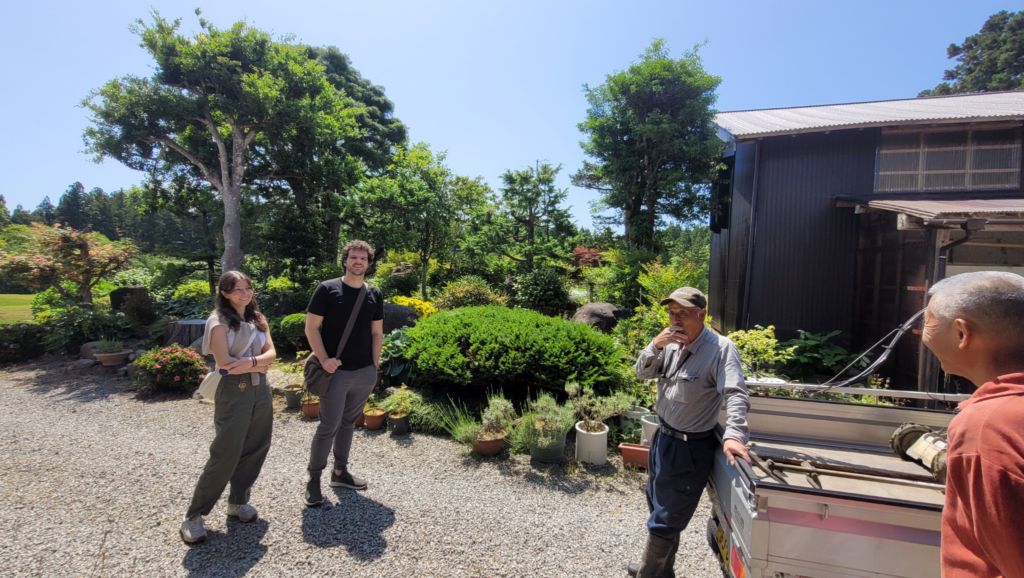
Morning moments together
After that, we visited a festival in a friend’s village. From around 6 a.m. to 9 p.m., Oni-daiko (demon drumming) is performed at each household to pray for a good harvest and the village’s safety. This ritual also wards off evil and promotes good health. Villagers begin practicing months in advance, and the event strengthens community bonds.
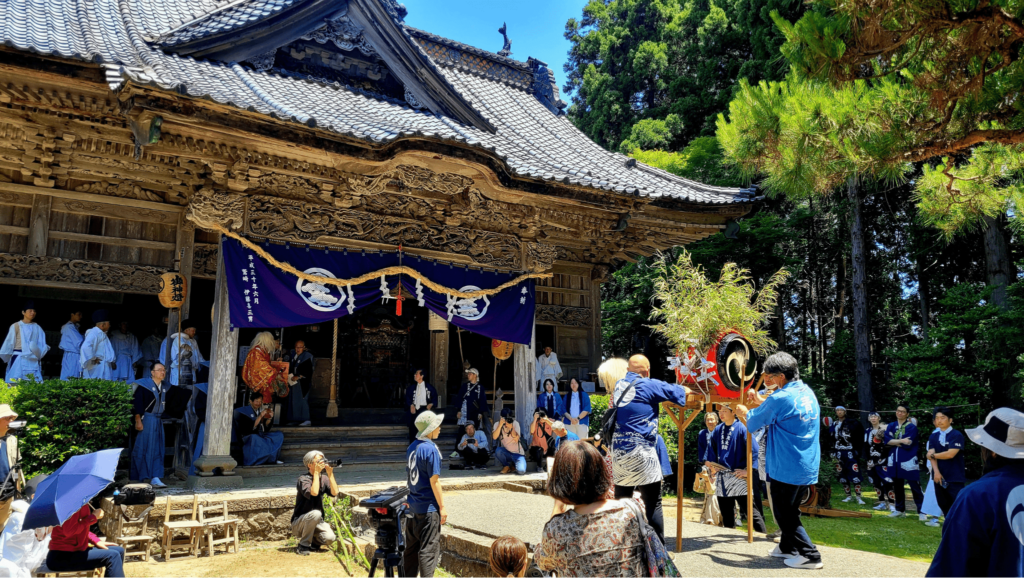
Traditional village festival
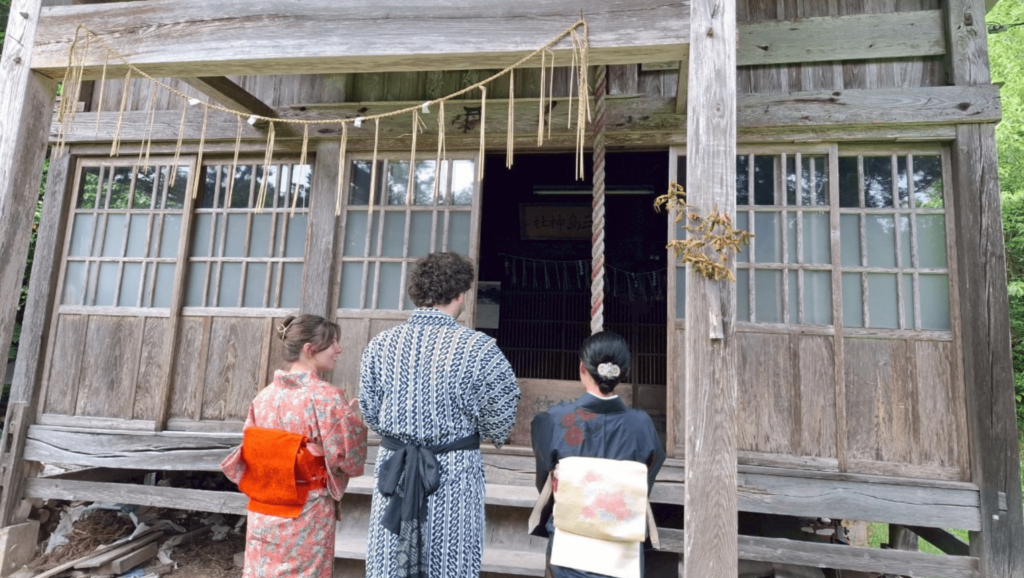
Lily also wore a kimono for the first time—it suited her perfectly! We visited the village shrine, prepared matcha, and enjoyed traditional Japanese sweets. Wearing traditional clothing naturally brings focus and makes the experience even more special.
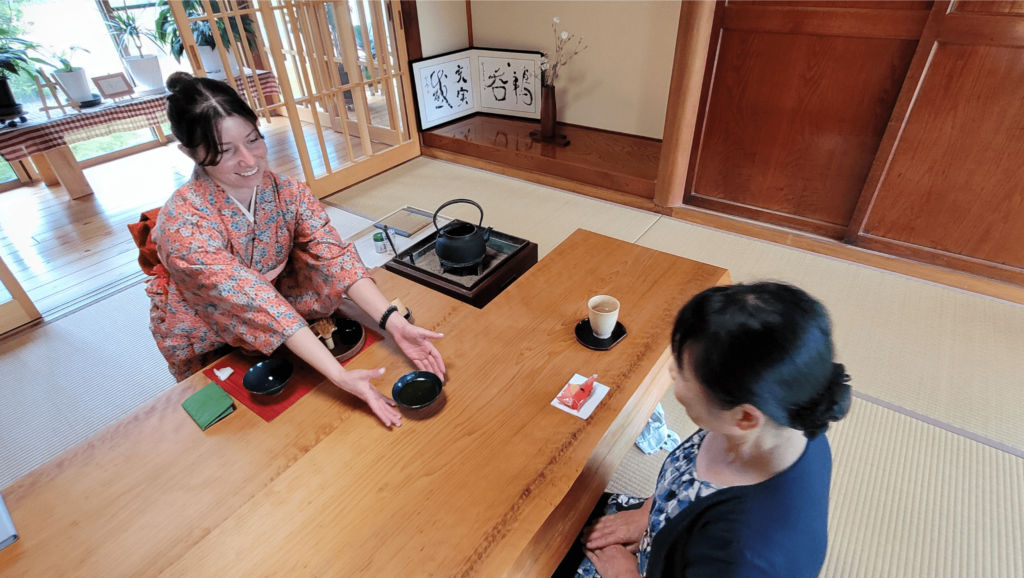
Kimono tea experience
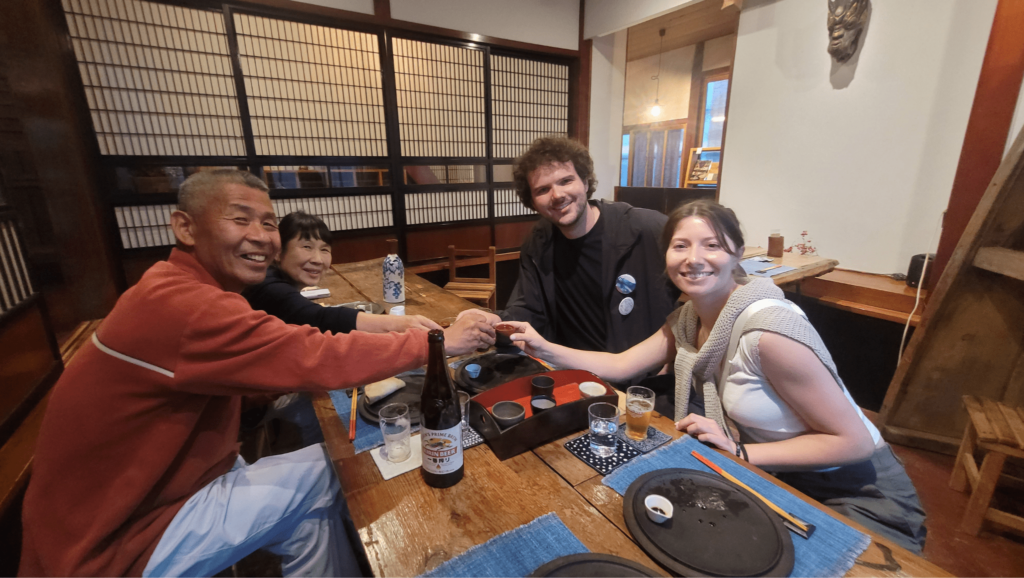
Enjoying sake together 🍶
Day 4: Crafts and History
We spent the day exploring southern Sado. Cole and Lily tried pottery, rode tarai-bune (tub boats), and wandered through the charming streets of Shukunegi.
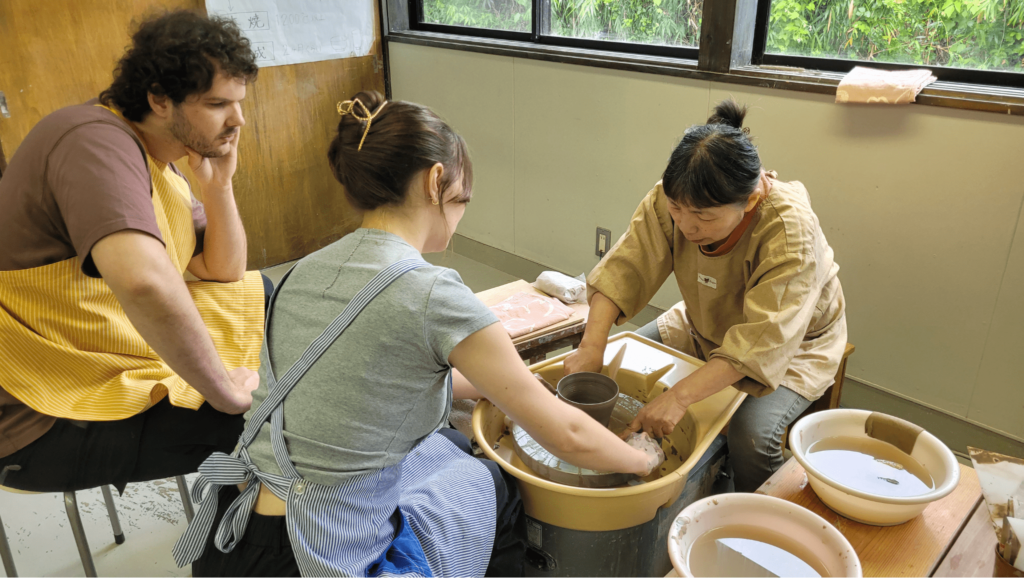
Pottery experience
In the evening, we dropped them off at their guesthouse and said our heartfelt goodbyes. Later that night, they had a lovely dinner at a recommended French restaurant.
During their stay, Cole and Lily experienced life in a small village on Sado Island and felt the warmth of the local people. Seeing them interact with the villagers made me very happy.
For two people from the big city of Los Angeles, life in the Sado countryside must have been fresh and full of surprises. Their curiosity, eagerness to try new things, and openness to learning really impressed us. We also learned a lot from them. Thank you so much for visiting Sado—we hope to see you again!
A homestay with a customized tour in Sado is perfect for anyone who wants to truly feel everyday life in Japan and connect with its traditional culture. Here, you can experience the bonds between people and the real rhythm of village life.
Guest Feedback
Last June I returned to Sado for the second time to stay with Miwa and the Sasaki family. While I had already been to Sado a few years prior, visiting again was just as special.
I was able to see a Noh theatre performance at a temple, experience Oni-daiko drumming, and even try pottery-making.
Personally, my favorite moments were spending time with the Sasaki family and making new friends on the island. This homestay offers a unique chance to experience deep Japanese culture that would otherwise be very difficult to access. Because of Miwa and her family’s warmth and hospitality, Sado has become a special part of my life. Anyone curious about Japan’s countryside lifestyle and customs should definitely consider visiting Miwa!
Experience Sado Island
Cultural Experiences:
Hands-on activities such as making onigiri (rice balls), farming, wearing a kimono and enjoying wagashi (Japanese sweets), or calligraphy. Activities can be tailored to your interests.
Customized Tour:
A fully personalized 1-day tour designed around your interests, with a private interpreter and driver.
Homestay:
Spend 3 nights and 4 days fully immersing yourself in everyday life in a rural Japanese village. Practice Japanese naturally while experiencing authentic country living.
Sado Japanese Language Study:
Stay on Sado Island and take Japanese lessons that combine classroom learning with hands-on cultural experiences.